Step 1: Is This an Emergency?
If you have found an animal that is seriously injured (ex: an obvious broken bone) or has significant bleeding (more than a superficial scratch), this may be an emergency situation.
The best course of action is to contact a major city center rehabilitation facility that has the medical staff and resources to help the animal immediately. For those that live in Middle TN, that would be Nashville-area and Chattoonga facilities.
We are setup to treat minor injuries and help orphaned opossums.
Step 2: Identify the Species
Many infant mammals look very similar. It’s important to identify the species of mammal.
Sending photos to a wildlife rehabilitator can help confirm the species as well as internet searches for differences.
Newborn Opossum
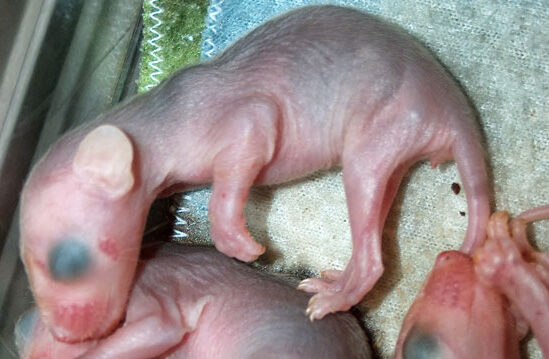
Newborn Squirrel
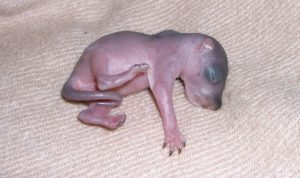
Note the black toe nails for baby squirrels. More round head, darker color and larger forebody.
Newborn Rat

Step 3: Is a Rescue Necessary?
Don’t be a kidnapper!
Not all baby mammals need to be rescued, in fact, many do not.
BEFORE you take an animal from the wild, determine if it really needs human intervention. Click on the animal title below to learn more about when to rescue and when not.
For Tennessee Residents
This Information is specific for residents of the state of Tennessee. If you do not live in TN, “Bless Your Heart”, it’s a great state and you should consider a relocation. You will need to find wildlife rehabilitators closest to you. For help knowing where to start, see the National Wildlife Rehabilitators Association (NWRA).
Step 4: Rescue
Step 5: Helping Rescued Animals, especially Possums
Warmth. Safety & calm. Hydration. If you can do these, you will help tremendously.
Warmth
Baby possums can not maintain their body temperature. Optimally they need supplemental heat ~93 F (90-95F). If animals are cold, they can’t properly hydrate, and therefore can’t process food. Warmth is CRITICAL to their survival especially if they don’t yet have their mature fur (where they look like a miniature version of an adult).
Use a heating pad on LOW with half of the container on the pad and half off, so they can move away from the heat if too much. Note many heating pads have an auto-shut off, so be aware. Their body temperature is lower than a humans so it should feel warm but not hot. Also beware that babies can overheat as well, so don’t make it too hot. Optionally, you can also fill water bottles or jars with warm water with a t-shirt of cloth around it — just make sure the bottle can’t fall over or leak.
Safety & Calm
Keep them away from pets, children, and in a dark, quiet, safe, calm environment. Remember humans (and other domestic pets) are the scary monsters to them. Stress will diminish their healing from injuries. Limit handling as well. This is not the time to bring friends and family over for a photo session with scared trapped rescued animals.
Hydration
After they are warm and calm, you can offer them hydrating fluids. Hydration is CRITICAL and is more than just water. You can offer the following:
* Pedialyte mixed with water (3 parts water, 1 part Pedialyte). [Can be generic version of Pedialyte, the brand is not important.]
* Water with a couple of drops of honey (or with a little apple juice)
If an adult (or clearly not a baby), you can put some in a cap or shallow dish. Baby possums can’t drink from a feeding nipple, so you can offer with a feeding syringe (NO needle), drop by drop and let them lap it up. Be careful not to get fluid in their nose and do not force fluids into their mouths.
Do NOT …
No feeding the animal without talking with a wildlife rehabilitator first (especially for babies). Seriously, please do not.
It’s well intentioned, but feeding an animal can actually be life threatening and will likely make the rehabilitation process slower and more difficult. Animals can’t digest/process food without being properly hydrated (and warm!). Also not all food is appropriate for that species and their stage of development — it can cause diarrhea which will worsen dehydration which is a serious problem, and in some cases there are complications like refeeding syndrome which can be fatal especially for emaciated animals.
If we’ve been communicating and have agreed that we have capacity to take in the animal, please fill out the Admissions Form. BUTTON/LINK